Like Goldilocks searching for the perfect fit, finding the right soil for your roses isn’t about grabbing the first bag you see. I’m here to walk you through five standout options that’ll give your roses exactly what they need: proper drainage, aeration, and nutrients.
But here’s the thing, not all rose soils are created equal, and choosing the wrong one could sabotage your blooms before they even start. Let me show you what actually separates the best from the rest.
Rose Soil Organic Potting Mix for Roses
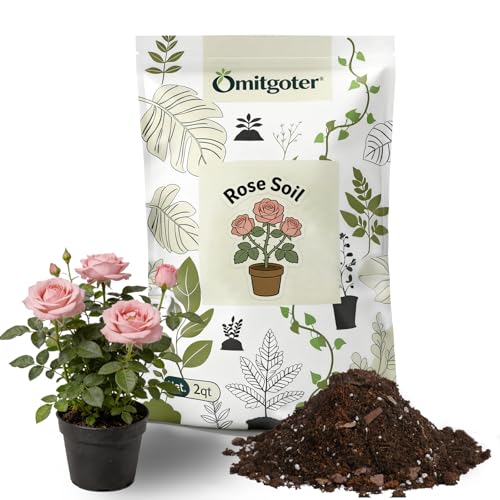
【100% Natural Organic Formula】Omitgoter Rose Nutrient Soil is formulated with 100% natural ingredients (peat, coconut coir, perlite, bark, humus) without any chemical...
If you’re new to rose gardening or you’ve struggled with soggy soil and root rot in the past, the Omitgoter Rose Soil Organic Potting Mix might be your answer. This 1-quart blend combines peat, coconut coir, perlite, and bark, creating a naturally breathable structure that prevents waterlogging while delivering essential nutrients your roses crave.
There’s no mixing required, no chemical additives, and no guesswork involved. Simply fill your pot and plant. The loose composition promotes superior drainage and aeration, reducing your fertilization burden while supporting vibrant blooms and healthy growth indoors or outdoors. For gardeners seeking reliable, straightforward soil that actually works, this organic formula delivers exactly what roses need.
Best For: This product is best for both beginner and experienced gardeners who want to grow healthy roses indoors or outdoors without the hassle of dealing with waterlogging, root rot, or complex soil preparation.
Pros:
- Ready-to-use formula with no mixing required, making it extremely beginner-friendly and convenient
- 100% natural organic ingredients without chemical additives ensure a safe, environmentally-conscious growing medium
- Superior drainage and aeration specifically designed for roses reduce fertilization needs while promoting vibrant blooms and healthy growth
Cons:
- Limited to a 1-quart size, which may require multiple purchases for larger gardening projects or multiple pots
- As an organic potting mix, it may need to be replenished or refreshed more frequently than synthetic alternatives over extended growing seasons
Coast of Maine Organic Planting Soil for Roses
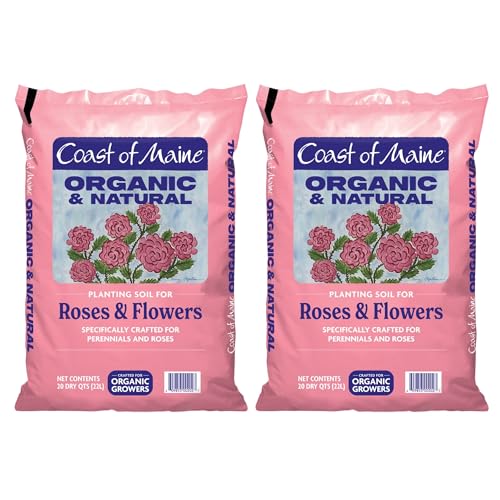
PREMIUM INGREDIENTS: This specifically crafted organic compost blend is the ideal planting mix to improve and revitalize the plant soil for rose varieties, flowers, and...
Want a soil that actually delivers on the promise of healthier roses and fuller blooms? Coast of Maine’s Organic Planting Soil checks all the boxes. This premium blend combines sphagnum peat moss and composted manure to create ideal conditions for your roses, whether you’re planting in beds or containers.
The formulation balances moisture retention with enhanced drainage, which is crucial since roses hate soggy roots but need consistent hydration. I appreciate that it’s OMRI listed for organic gardening and reflects Coast of Maine’s commitment to sustainable practices since 1996. Each 20-quart bag weighs 22 pounds, and you’re getting two bags per unit, giving you substantial coverage for revitalizing tired soil or filling containers.
Best For: This product is best for gardeners and rose enthusiasts who want a premium, organic soil solution for both in-ground beds and container gardening while prioritizing sustainable, earth-friendly practices.
Pros:
- OMRI listed for organic use with all-natural components (sphagnum peat moss and composted manure) that support healthy rose growth and fuller blooms
- Dual-purpose formulation balances moisture retention with enhanced drainage, preventing root rot while maintaining consistent hydration that roses need
- Generous coverage with two 20-quart bags (44 quarts total) per unit, providing substantial soil volume for revitalizing existing beds or filling multiple containers
Cons:
- Sphagnum peat moss raises environmental concerns for some gardeners despite the brand’s sustainable commitment, as peat extraction impacts wetland ecosystems
- 22-pound bags per unit require physical handling and may be heavy for elderly or mobility-limited gardeners without assistance
Specialty Rose Planting Mix by Perfect Plants (4qt)

SUPERIOR DRAINAGE & AERATION- With sand and composted pine bark chunks our specialty Rose Potting Mix balances superb water drainage with just the right amount of nutrient...
Perfect Plants’ Specialty Rose Planting Mix is my top pick for gardeners who want a ready-made solution specifically formulated for roses. This hand-mixed blend combines composted pine bark, granite sand, and peat moss to create superior drainage and aeration that roses need.
The 18-6-8 slow-release fertilizer dissolves gradually over twelve months with each watering, providing steady nutrition for sturdy roots and vibrant blooms. Available in convenient 4 qt and 8 qt resealable bags, it’s versatile enough for container Drift roses or flowering hedges like Knock Outs. And since it’s made right here in the USA by a family farm with forty-plus years of experience, you’re getting quality backed by genuine expertise.
Best For: Gardeners seeking a specialized, ready-made soil solution designed specifically for roses of all varieties, from container plantings to flowering hedges.
Pros:
- Premium hand-mixed formula with 18-6-8 slow-release fertilizer providing consistent nutrition for 12 months
- Superior drainage and aeration from composted pine bark, granite sand, and peat moss supports healthy root development and vibrant blooms
- Made in the USA by a family farm with 40+ years of horticultural expertise, ensuring quality and reliability
Cons:
- Limited to rose-specific applications, making it less versatile for other plant types in your garden
- Slow-release fertilizer benefits take time to manifest, requiring patience before seeing full results
Doter Organic Desert Rose Potting Soil Mix 1qt

【Science-Backed Formula】Expertly crafted 100% natural potting soil for desert rose plant live, enriched with balanced minerals to mimic native habitats. Ideal for desert...
Looking to give your desert rose the soil environment it actually craves? I’d consider Doter’s Organic Desert Rose Potting Soil Mix. This 1-quart formula delivers what your plant genuinely needs: balanced minerals that mirror native desert habitats, preventing root shock during transplanting.
The perlite-enhanced blend promotes rapid drainage and oxygen circulation, which is exactly what moisture-sensitive succulents demand. What I appreciate most is its versatility. While formulated specifically for desert roses, it works beautifully for cacti, Sansevieria, and other succulents in both patio containers and indoor planters.
The straightforward pour-and-plant approach makes it accessible whether you’re an experienced gardener or just starting out. No fuss, just effective results.
Best For: This product is best for both seasoned gardeners and beginners who want to repot desert roses, cacti, and other succulents with a science-backed soil formula that prevents root shock and promotes healthy growth.
Pros:
- Superior drainage system with perlite enhancement promotes rapid water flow and oxygen circulation ideal for moisture-sensitive succulents
- Science-backed formula with balanced minerals mimics native desert habitats and prevents root shock during transplanting
- Versatile application works for desert roses, cacti, Sansevieria, and various succulents in both indoor and outdoor containers
Cons:
- 1-quart size may be limiting for larger potting projects or multiple plants requiring repotting
- Specialized formulation for desert plants limits its usefulness for gardeners growing tropical or moisture-loving plant varieties
Rosy Soil Organic Potting Mix with Biochar (4qt)

ORGANIC INDOOR POTTING SOIL, MADE WITHOUT PEAT: Biochar, worm castings, mycorrhizae, compost, and bark fines replace peat moss entirely; every ingredient of this house plant...
Rosy Soil’s organic potting mix stands out for indoor gardeners who want living soil without the peat. I appreciate that it combines biochar, worm castings, mycorrhizal fungi, and beneficial microbes to create a living ecosystem in your pot.
The bark fines and sand structure keeps drainage open and prevents root rot, which matters when you’re nurturing Monsteras, Pothos, orchids, or herbs indoors. Since the biochar resists compaction over time, your soil stays aerated longer. The 4-quart bag gives you flexibility to refresh existing soil or pot multiple plants, and the resealable packaging keeps it fresh between uses.
Best For: Indoor gardeners seeking a sustainable, peat-free potting mix that supports healthy root development and plant growth across a variety of houseplants like Monsteras, Pothos, orchids, and herbs.
Pros:
- Contains living soil components (mycorrhizal fungi, beneficial microbes, worm castings) that enhance nutrient and water uptake for healthier plants
- Biochar and bark fines create excellent drainage and aeration, preventing root rot and soil compaction over time
- Versatile 4-quart size allows you to pot multiple plants or refresh existing soil, with resealable packaging for convenient storage
Cons:
- 4 quarts may not be enough for larger potting projects or gardeners with extensive plant collections
- Availability may be limited depending on location, as it appears to be primarily sold through online retailers
Factors to Consider When Choosing Soil for Rose Plants
When I’m helping you pick the right soil for your roses, I focus on five critical factors that’ll make or break your blooms: drainage and aeration keep roots from rotting, nutrient content and release feed your plants steadily over time, pH balance (roses prefer slightly acidic soil around 6.0-6.5) ensures they can actually absorb those nutrients, moisture retention capacity strikes that sweet spot between wet and dry, and whether you go organic or synthetic ingredients impacts both how your soil behaves and what you’re comfortable putting in your garden. And here’s the thing: these factors don’t work in isolation, so understanding how they interact helps you make smarter choices rather than just grabbing whatever bag looks nice at the store. I’ll walk you through each one so you can evaluate soil options with confidence.
Drainage And Aeration
Why do roses wilt in soggy soil while thriving in well-draining mixes? The answer lies in oxygen. Roses need roots that breathe, and waterlogged soil suffocates them, triggering root rot and nutrient starvation.
I recommend focusing on two key elements: pore size and texture. Incorporate perlite or sand to enlarge pores and boost oxygen flow. Lightweight materials like peat, coconut coir, and bark fines create air-filled spaces that roots crave.
And here’s the balancing act: your soil must drain rapidly without becoming a desert. Dense, compacted mixes trap water and slow nutrient uptake, so avoid heavy clay-based soils entirely. The ideal mix moves water through quickly while retaining just enough moisture for root health.
This drainage-aeration combo isn’t optional for roses. It’s foundational.
Nutrient Content And Release
Getting the nutrient balance right separates roses that merely survive from those that absolutely flourish. I’d prioritize soils with slow-release fertilizers that feed your plants gradually over months rather than requiring constant applications. Check that N-P-K ratio on the bag, like 18-6-8, which reflects nitrogen, phosphorus, and potassium content tailored to roses’ steady nutritional demands.
Organic amendments matter tremendously. Worm castings, compost, and biochar improve nutrient retention while supplying micronutrients your roses crave. And here’s what I’ve learned: 100% natural or organic ingredient labels signal you’re avoiding synthetic salts that burn foliage and damage roots.
A balanced mix supporting extended nutrient release sustains healthy root systems and promotes continuous flowering throughout the season. That’s the foundation for thriving roses.
pH Balance For Roses
You’ve nailed the nutrient content, but here’s what I’ve discovered: even the best fertilizers won’t perform their magic if your soil’s pH is off. Roses thrive in slightly acidic to neutral soil, ideally between 6.0 and 6.5. This sweet spot unlocks nutrient availability that your plants desperately need.
When pH dips too low, calcium and magnesium become locked away, triggering poor growth and lackluster blooms. Push it too high into alkaline territory, and iron and manganese deficiencies emerge, showing up as yellowing leaves and stunted flowers.
Some premium potting mixes arrive pre-balanced to maintain stable pH ranges, reducing your amendment workload considerably. You can adjust soil pH with sulfur to lower it or lime to raise it as needed.
Moisture Retention Capacity
How you balance water-holding ability with drainage makes or breaks your rose-growing success. I’ve found that the sweet spot involves combining organic matter like compost or peat with coarser materials such as perlite or pine bark chunks.
Here’s why: organic components increase moisture retention, supporting steady nutrient release to your roses, while coarser blends prevent waterlogging that suffocates roots. The key is avoiding extremes. Very high moisture retention creates problems, but adequate water availability keeps roots evenly moist.
Look for soil mixes specifically labeled for roses, as they’re formulated to hit this balance perfectly. You’ll notice the difference in your bloom cycles when your soil breathes properly while maintaining consistent moisture. That’s the foundation of healthy, thriving roses.
Organic Versus Synthetic Ingredients
When it comes to feeding your roses, the choice between organic and synthetic soil ingredients shapes everything from nutrient availability to long-term soil health. Organic mixes use natural components like peat, coconut coir, compost, and biochar, building soil structure and supporting beneficial microbes that cycle nutrients slowly over time. Synthetic blends, meanwhile, pack artificial fertilizers designed for rapid nutrient release, giving your roses an immediate boost but risking faster nutrient leaching.
OMRI-listed organic soils guarantee natural inputs meeting production standards, while conventional options skip those certifications. For roses specifically, organic blends create breathable, porous textures that prevent waterlogging and encourage healthy roots. Synthetic versions aggressively tailor pH and nutrient balance for short-term performance.
Your choice depends on whether you’re prioritizing immediate results or sustainable, long-term soil vitality.
Soil Texture And Composition
What makes the difference between roses that thrive and those that struggle often comes down to soil structure, not just what’s in it. I’ve found that the best rose soils balance drainage with moisture retention through thoughtful texture composition.
You’ll want a loose, well-draining base that prevents waterlogging, which I achieve by incorporating sand or perlite. These coarse components create air pockets that keep roots healthy. But here’s the thing: you can’t sacrifice moisture retention entirely. That’s where organic matter enters the picture.
High humus content from compost or peat alternatives holds steady moisture near your root zone without becoming soggy. The magic happens when you blend these elements together. Coarser particles work alongside finer materials, creating balanced aeration while supporting nutrient availability. This structural harmony reduces root rot risk and promotes robust growth.
Long-Term Soil Performance
Beyond that initial planting season, here’s where soil choice reveals its true value: the soils that keep your roses thriving year after year aren’t just about immediate drainage and moisture balance. I’m talking about formulations that maintain consistent structure, resisting compaction and degradation across multiple seasons.
Look for mixes incorporating organic matter and balanced nutrients that release gradually, sustaining your roses between fertilizations. Aeration components like perlite, sand, or bark fines continue supporting root oxygen supply long-term. And here’s the thing: OMRI-listed organic components build enduring soil biology, fostering beneficial microbes that enhance nutrient uptake over time.
Durable packaging like resealable bags helps you maintain quality throughout the growing season. When soil holds its integrity season after season, your roses respond with consistent vigor and blooming.