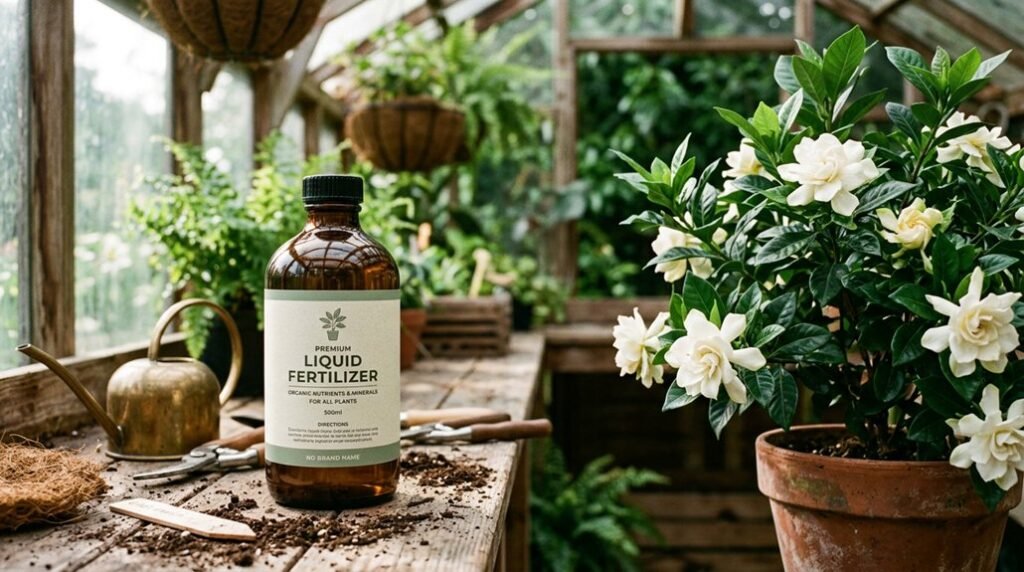
I’ve discovered that getting your gardenias to thrive comes down to one thing: the right fertilizer. You see, these finicky plants aren’t just hungry for nutrients, they’re hungry for the right nutrients.
And here’s where most gardeners go wrong. They grab whatever’s on the shelf without considering the specific acid levels and micronutrient profiles their gardenias actually need. Let me show you which seven fertilizers stand out and why they’ll transform your blooms.
Gardenia Fertilizer Liquid Plant Food for Blooms
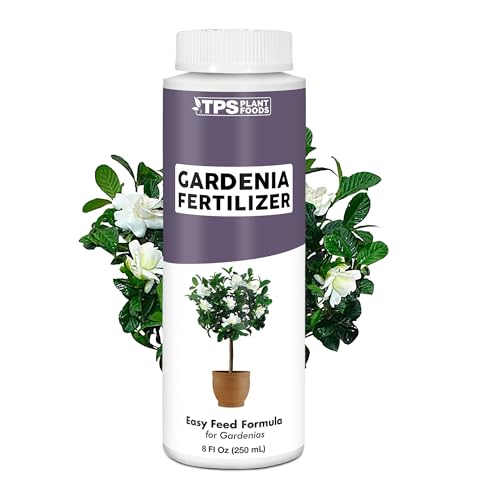
Made for Gardenia Plants – Formulated to support healthy growth in gardenias and similar shrubs. Supports Green Foliage & Blooming – Helps encourage vibrant leaves and...
If you’re growing gardenias and want those showstopping blooms without the guesswork, TPS Nutrients’ Gardenia Fertilizer Liquid Plant Food is designed specifically for you. This 8-ounce liquid formula targets the exact nutritional needs of acid-loving plants, delivering balanced nutrients that fuel more blooms, richer green leaves, and stronger root systems.
Made in the USA, it works beautifully whether you’re cultivating gardenias in outdoor beds, patios, or containers. The formula’s tailored nutrient balance recognizes that gardenias thrive in low-pH soil conditions, so you’re getting chemistry matched to your plant’s actual requirements rather than generic nutrition. Simply apply according to directions, and you’ll support the lush foliage and abundant flowering gardenias are known for.
Best For: Gardeners growing gardenias, camellias, rhododendrons, and other acid-loving plants who want to maximize blooms, foliage quality, and root strength in outdoor beds, patios, or container gardens.
Pros:
- Specifically formulated for acid-loving plants with balanced nutrients tailored to gardenia needs rather than generic plant food
- Supports multiple desired outcomes including more blooms, richer green leaves, and stronger root development
- Made in the USA and works effectively in both outdoor and container growing environments
Cons:
- Limited to 8 fluid ounces per bottle, which may require frequent repurchasing for larger gardens or multiple plants
- Requires following specific application directions to achieve desired results, adding a step to regular plant care routines
- Best suited for acid-loving plants specifically, limiting versatility if you grow a wide variety of plant types
GARDENWISE 8-4-8 Acidic Fertilizer for Azaleas & Hydrangeas

🌺 VIBRANT BLOOMS & ROBUST GROWTH: Enriched with essential nutrients like magnesium, iron, and manganese, GARDENWISE 8-4-8 is ideal for preventing chlorosis in acid-loving...
I’d reach for GARDENWISE 8-4-8 if your gardenias are struggling in neutral or alkaline soil. This granular fertilizer delivers iron, magnesium, and manganese while acidifying your soil, which gardenias absolutely crave.
You’ll sprinkle the slow-release granules around the base, mix them in, and water thoroughly. Three feedings yearly keeps your plants nourished consistently. What makes this option particularly smart: it’s bio-solid fertilizer packed with beneficial microbes that improve overall soil health. The formula specifically targets gardenia blooms, enhancing color and vitality when your plants need it most.
Best For: This product is best for gardeners with acid-loving plants like gardenias, hydrangeas, azaleas, and blueberries who need to acidify neutral or alkaline soil while promoting vibrant blooms and robust growth.
Pros:
- Slow-release granules provide sustained nutrition with just three feedings per year, making it convenient for both beginner and experienced gardeners
- Contains beneficial microbes and essential nutrients (iron, magnesium, manganese) that improve soil health and prevent chlorosis in acid-loving plants
- Specifically formulated to enhance bloom color and vitality in gardenias and hydrangeas while boosting blueberry production
Cons:
- Limited to a 12-ounce bag size, which may require multiple purchases for larger gardens or extensive plantings
- Requires proper mixing into soil and consistent watering for optimal results, which demands more effort than liquid fertilizers
- Only suitable for acid-loving plants, making it incompatible with neutral or alkaline-preferring plants in mixed gardens
Gardenia Fertilizer – Indoor & Outdoor Plant Food

2X MORE VALUE: With a bigger-sized bottle, 16 oz of our Gardenia Fertilizer for gardenias & other flowering bushes makes 96 gallons of flower fertilizer while the 32 oz...
HiThrive’s Gardenia Fertilizer stands out as the best choice for gardeners who want vibrant blooms without the guesswork. This 16 oz liquid concentrate makes 96 gallons of plant food, delivering nitrogen for growth, phosphorus for flowering, and potassium for resilience.
You’ll also get micronutrients like calcium, magnesium, and iron that reverse yellowing leaves and nutrient deficiencies. The application’s straightforward: mix half a capful per gallon for regular feeding or one capful for deficiency correction.
Beyond gardenias, it works beautifully on hydrangeas, azaleas, and camellias, whether you’re nurturing indoor potted plants or outdoor flowering bushes. No complex steps required.
Best For: This fertilizer is best for gardeners seeking an easy-to-use, concentrated liquid solution to promote vibrant blooms and correct nutrient deficiencies across multiple flowering plants like gardenias, hydrangeas, and azaleas.
Pros:
- Highly concentrated formula makes 96 gallons from a single 16 oz bottle
- Balanced nutrient profile with nitrogen, phosphorus, potassium, and essential micronutrients addresses both growth and flowering needs
- Simple application process requires only mixing half to one capful per gallon with no complex steps or special equipment
Cons:
- Liquid concentrate requires dilution before each use, which may be less convenient than granular or slow-release alternatives
- Limited to flowering plants and may not be suitable for a broader range of houseplants or vegetables
- Requires proper storage and handling to prevent spillage or degradation, taking up shelf space compared to powdered options
FOLLOWIN Gardenia Fertilizer 3-1-2 NPK Liquid Plant Food

RESTORES LUSH GREEN FOLIAGE: Revives yellowing leaves and accelerates new growth with targeted nitrogen delivery. Your gardenia develops deep-green, glossy leaves and...
Want a fertilizer that actually matches what gardenias crave? FOLLOWIN’s 3-1-2 NPK formula delivers exactly that. I mix this liquid concentrate at a 1:100 to 1:300 ratio, applying it every other watering cycle, which keeps things refreshingly simple.
The nitrogen targets deep-green foliage, potassium prevents leaf scorching, and the low-phosphorus approach protects delicate roots from burning. I appreciate how the calibrated cap eliminates guesswork, and the water-soluble formula rinses clean from tools. Whether I’m nurturing gardenias indoors or outdoors, this bottle covers my needs without complicated feeding schedules or mysterious nutrient formulations.
Best For: Gardenia enthusiasts and indoor-outdoor plant lovers seeking a simplified feeding routine with a formula specifically calibrated to prevent common issues like yellowing leaves, leaf scorching, and root burn.
Pros:
- Simplified feeding schedule with easy 1:100 to 1:300 mixing ratio applied every other watering cycle—no complicated calendars required
- Calibrated cap design eliminates guesswork, and water-soluble formula rinses clean from tools and surfaces
- Low-phosphorus, potassium-rich formulation protects delicate roots while delivering deep-green, glossy foliage and supporting abundant blooms
Cons:
- Requires precise mixing ratios (1:100 to 1:300) that demand user attention and may be challenging for beginners unfamiliar with concentrate formulations
- Specialized 3-1-2 NPK formula is optimized for gardenias specifically, limiting versatility for gardeners with diverse plant collections
Gardenia Liquid Fertilizer with Organic Micro-Nutrients (10 oz)

🌿 Natural Probiotic Formula – 100% green and chemical-free Gardenia fertilizer made with multiple probiotics to enrich soil health and encourage natural plant growth....
GrowThrive’s concentrated formula is your answer if you want gardening simplified without sacrificing results. You’ll dilute just one cap into 120 liters of water using their straightforward 1:400 ratio, and you’re ready to feed your gardenias for weeks.
The probiotic base contains over 200 million beneficial bacteria per milliliter, which enriches your soil naturally while promoting vibrant blooms and stronger root systems. And here’s what I appreciate: it’s genuinely gentle, chemical-free, and safe around pets and kids. The 2-year shelf life means you’re not rushing through bottles, plus the recyclable packaging aligns with responsible gardening. Your flowers respond with enhanced color and larger petals while developing the robust roots they need to thrive.
Best For: Gardeners seeking a gentle, chemical-free fertilizer solution that promotes vibrant blooms and stronger root systems while maintaining environmental responsibility and pet safety.
Pros:
- Highly concentrated formula with a convenient 1:400 dilution ratio yields up to 120 liters of ready-to-use plant food from a single 10 oz bottle
- Natural probiotic base containing over 200 million beneficial bacteria per milliliter enriches soil health and promotes vibrant flower color with larger petals
- Chemical-free, non-toxic, and safe for use around pets and children with a 2-year shelf life and eco-friendly recyclable packaging
Cons:
- Requires dilution before use, which may be less convenient than ready-to-use liquid fertilizers for some gardeners
- Specialized formula designed specifically for gardenias may limit versatility for gardeners with multiple plant types
- Probiotic-based formulas may require consistent application to maintain beneficial bacteria levels in soil
GARDENWISE Organic Kelp Seaweed Fertilizer for Gardenia (8 OZ)

🌊 DERIVED FROM ASCOPHYLLUM NODOSUM: Our concentrate, sourced from Ascophyllum Nodosum kelp, is rich in over 60 trace elements, amino acids, enzymes, carbohydrates, and...
If your Gardenias are struggling with weak growth or lackluster foliage, this liquid kelp concentrate might be exactly what you need. Derived from Ascophyllum nodosum kelp, it delivers over 60 trace elements, amino acids, and enzymes that promote lush foliage and strong roots.
I’d dilute it at 1 teaspoon per 12 ounces of water for soil application, or use half that strength for foliar sprays. Apply when your soil’s top inch begins drying, every 7 to 10 days. Being 100% organic and non-toxic, it’s safe for pets and children.
Best For: This product is best for gardeners with Gardenias who want a natural, organic solution to promote lush foliage and strong root development without synthetic chemicals.
Pros:
- Contains over 60 trace elements, amino acids, and enzymes derived from Ascophyllum nodosum kelp to support robust plant growth
- 100% organic and non-toxic, making it safe for use around pets and children in both indoor and outdoor settings
- Flexible application methods (soil drench or foliar spray) and a simple mixing ratio of 1 tsp per 12 oz water
Cons:
- Requires regular applications every 7 to 10 days for consistent results, which may be inconvenient for some gardeners
- Limited to being a kelp-based supplement rather than a complete fertilizer, so it may need to be used alongside other nutrients for comprehensive plant care
- Coverage and effectiveness depend on individual soil and plant conditions, so results may vary between different gardening environments
Nelson Acid Loving Plant Food for Blooms (2 lb)

PLANT FOOD: For All Acid loving plants and high pH soils featuring (NPK) Nitrogen (9%), Phosphate (13%), and Soluble Potash K20 (11%). Contains four acidifying sources to...
Nelson’s Acid Loving Plant Food is your answer if you’re nurturing gardenias, azaleas, camellias, or hydrangeas that crave acidic soil and abundant blooms. This 2-pound granular formula delivers a 9-13-11 NPK ratio designed specifically for acid-loving plants, featuring four acidifying sources to lower soil pH.
What differentiates it is the 3.2% iron content from three different sources, supporting lush green foliage and vibrant flowering. Apply at spring’s start, then every other month during growing season. The blend includes cottonseed meal for slow, steady feeding that won’t burn roots, plus ureaform and other slow-release nitrogen sources. With continued use, your gardenias develop stronger growth and increasingly spectacular blooms each season.
Best For: This product is best for gardeners with acid-loving plants like azaleas, camellias, gardenias, and hydrangeas who want to promote heavy blooming and maintain optimal soil pH in both in-ground and container plantings.
Pros:
- Specialized 9-13-11 NPK formula with four acidifying sources and 3.2% iron from three different sources specifically designed to meet the nutritional needs of acid-loving plants
- Slow-release nitrogen blend including cottonseed meal and ureaform minimizes risk of root burn while providing consistent, long-lasting nutrition
- Promotes vibrant flowering and stronger plant growth with continued seasonal use, delivering visible results when applied every other month during the growing season
Cons:
- 2-pound package size may require frequent repurchasing for larger garden areas or multiple plants
- Granular form requires proper application timing and spacing to avoid over-concentration in specific areas
- Product is specifically formulated for acid-loving plants, limiting its usefulness for gardeners with diverse plant types requiring different soil pH levels
Factors to Consider When Choosing Fertilizer for Gardenia Plants
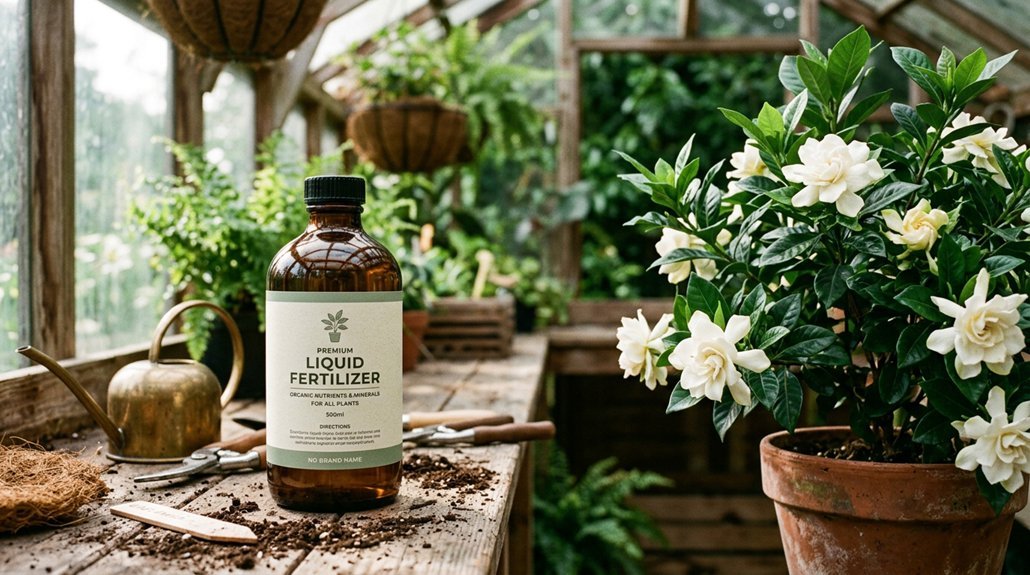
When I’m selecting the right fertilizer for my gardenias, I focus on several key factors that’ll make a real difference in how well they bloom and thrive. You’ll want to contemplate the soil pH requirements (gardenias love acidic conditions), the nutrient composition balance (especially nitrogen, phosphorus, and potassium ratios), whether you prefer liquid or granular forms based on your watering habits, and how often you’ll need to apply the fertilizer throughout the growing season. Each of these elements works together to create the ideal feeding schedule that keeps your gardenias healthy and produces those gorgeous fragrant blooms you’re after.
Factors to Consider When Choosing Fertilizer for Gardenia Plants
How do you select a fertilizer that’ll actually cause your gardenias to thrive rather than struggle? I’d concentrate on these key factors:
Soil pH and Acidity: Gardenias demand acidic soils, so seek fertilizers specifically formulated for acid-loving plants to prevent chlorosis and support those gorgeous blooms.
Nutrient Balance: Look for a balanced N-P-K ratio that feeds both foliage and flowers, with slow-release nitrogen to avoid burning leaves.
Micronutrients: Ensure it includes iron, magnesium, and manganese for vibrant blooms and healthy green growth.
Application Method: Consider whether liquid or granular works better for your schedule and garden setup, whether you’re growing potted plants or in-ground beds.
Safety and Compatibility: Check instructions for proper dilution rates and any notes about root sensitivity before applying.
Soil pH Requirements
Your gardenia’s ability to absorb nutrients hinges entirely on soil acidity, and I can’t stress this enough: you need to aim for a pH between 5.0 and 6.0 for ideal plant health. This sweet spot maximizes nutrient availability and prevents chlorosis, that yellowing of leaves that signals iron deficiency.
Here’s what I’ve learned about maintaining this balance: water quality and amendments naturally shift your soil pH over time, so regular monitoring matters. When selecting fertilizer, choose products labeled specifically for acid-loving plants. These formulations include acidifying components that help sustain your target range rather than working against it.
The payoff? Vibrant green foliage and a thriving gardenia that rewards your attention with gorgeous blooms season after season.
Nutrient Composition Balance
Once you’ve locked in your soil pH, the next layer of gardenia care involves matching the right nutrient ratios to your plant’s needs. I’d recommend looking for fertilizers with balanced nitrogen and higher phosphorus and potassium levels. This NPK composition promotes resilient blooms and strong root development without encouraging excessive leafy growth that delays flowering.
You’ll also want micronutrients like iron, calcium, magnesium, and trace elements to prevent leaf yellowing and support overall plant vigor. Slow-release formulations are particularly valuable here, delivering steady nutrition that reduces root burn risk and maintains stable pH. And consider acidifying nutrients alongside your macro elements, since gardenias thrive in acidic conditions. This combination approach ensures your plant gets everything it needs for spectacular flowering.
Liquid Versus Granular Forms
When it comes to feeding your gardenias, the fertilizer format you choose shapes both your application routine and how quickly your plant responds to nutrient boosts. Liquid fertilizers deliver nutrients fast, perfect when your gardenia shows deficiency signs, though they require more frequent applications mixed with water. Granular fertilizers work differently, breaking down slowly in soil and reducing how often you’ll need to feed.
I find granules easier for even base application without mixing hassle, while liquids adapt better to your watering schedule. Both forms support gardenias’ acid-loving nature, but liquids offer quicker micronutrient availability when your plant needs immediate help. Consider your patience level: frequent feeding versus set-it-and-forget coverage determines which format serves your gardenia best.
Application Frequency Schedule
How often should you actually feed your gardenia? The answer depends on which fertilizer form you choose. Liquid plant foods require more frequent applications, typically every other watering cycle, since they’re diluted at ratios like 1 teaspoon per gallon. This consistent schedule keeps nutrients flowing during active growth.
Granular and slow-release fertilizers, however, demand far less attention. I recommend three feedings per year with these products, simply sprinkling them around your plant and watering them in. This approach reduces maintenance while delivering steady nutrition.
Timing matters significantly too. Feed most aggressively during peak bloom periods and your gardenia’s active growing season. Dial back applications when dormancy sets in. Always follow your product’s specific instructions to avoid over-fertilization, which causes leaf burn and disappoints blooms.
Micronutrient Content Coverage
Beyond the primary nitrogen, phosphorus, and potassium that most fertilizers emphasize, micronutrients are what separate a decent gardenia fertilizer from a truly excellent one. I’d recommend checking labels for iron, magnesium, manganese, and zinc, which prevent yellowing and support vibrant foliage. Iron’s particularly crucial since gardenias thrive in acidic soil, and deficiencies there cause chlorosis, that frustrating pale leaf condition.
Look for fertilizers listing specific trace element percentages rather than vague “micronutrient blend” claims. Organic or kelp-based products shine here, delivering comprehensive micronutrient coverage alongside compounds that enhance soil health and nutrient uptake. The best formulations pair these micronutrients with balanced macronutrients to fuel both growth and blooms, not just green leaves.