Did you know that daylilies can produce blooms for up to 16 years with proper nutrition? I’ve found that choosing the right plant food makes the difference between mediocre flowers and a stunning display.
The key lies in understanding nitrogen, phosphorus, and potassium ratios specific to daylily needs. But here’s what most gardeners get wrong: one-size-fits-all fertilizers won’t cut it. Let me break down the five best options that’ll transform your beds.
10-10-10 Natural Based Daylily Food

Improves daylily bloom Improves daylily plant growth Beautiful blooms Grow healthy daylilies
If you’re serious about coaxing those vibrant blooms from your daylilies year after year, you’ll want a fertilizer specifically formulated for their needs, and that’s where Schreiners Iris Gardens’ 10-10-10 Natural Based Daylily Food shines. This powder formula delivers balanced nutrition with its 10-10-10 ratio, supporting both robust plant growth and impressive blooms.
I’d apply it before your daylilies flower, then again in late summer or early fall depending on plant vigor. When planting new divisions, incorporate it right into the soil. One 16-ounce bag covers approximately 25 newly planted daylilies, making it practical for expanding gardens. Since daylilies gradually deplete soil nutrients, an annual feeding regimen keeps them thriving in those rich, moist, well-drained soils they love.
Best For: This product is best for daylily enthusiasts and gardeners who want to maintain healthy, vibrant blooms year after year through targeted, species-specific nutrition.
Pros:
- Specifically formulated 10-10-10 balanced ratio designed to support both daylily plant growth and impressive blooms
- Convenient powder form with practical coverage (one 16-ounce bag covers approximately 25 newly planted daylilies)
- Natural-based formula supports long-term plant health when applied as part of an annual feeding regimen
Cons:
- Requires multiple applications throughout the growing season (before bloom and again in late summer/early fall) for optimal results
- Species-specific formulation limits versatility if you grow a variety of plants beyond daylilies
- Relies on proper soil conditions (rich, moist, well-drained) to be fully effective, which may require soil preparation or amendments
Miracle-Gro Shake ‘N Feed All Purpose Plant Food 4.5lbs
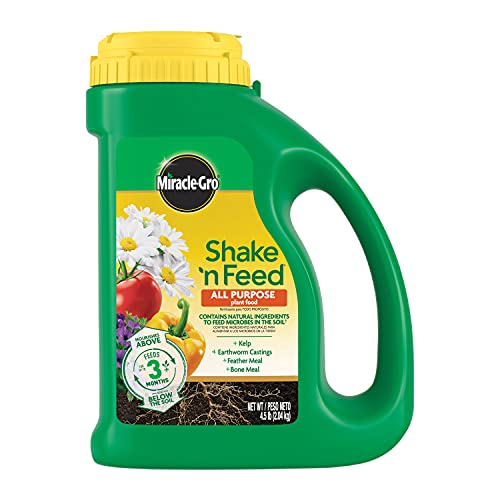
3 MONTHS OF FEEDING: Miracle-Gro Shake 'N Feed All Purpose Plant Food feeds plants for up to 3 months, and nourishes above and below the soil GROW STRONGER PLANTS: This plant...
You’ll appreciate this granular formula if you want a low-maintenance feeding solution that keeps working for up to three months. I find the shake-and-apply method refreshingly simple: just sprinkle it onto soil, work it into the top inch or so, and water.
The continuous-release design means your daylilies get steady nutrition without constant reapplication. One 4.5-pound container covers up to 180 square feet, so it stretches nicely across larger beds. The all-purpose blend supports root development and strength, which translates to more resilient plants that handle dry spells better. Since it’s designed for flowers, vegetables, and herbs alike, you’re getting a versatile option that works across your entire garden.
Best For: This product is best for gardeners seeking a convenient, low-maintenance feeding solution that works across multiple plant types in both in-ground and container gardens.
Pros:
- Continuous-release formula feeds plants for up to 3 months, reducing the need for frequent reapplication
- Simple shake-and-apply method requires no mixing with water, making it easy to use
- One 4.5-pound container covers up to 180 square feet and supports root development, helping plants become more drought-resistant
Cons:
- Requires reapplication every 3 months, which means ongoing maintenance and repurchasing throughout the growing season
- Granular form must be worked into the top 1-3 inches of soil, which can be labor-intensive in larger garden areas
- As an all-purpose formula, it may not provide specialized nutrition for plants with specific nutrient requirements
Miracle-Gro Water Soluble All Purpose Plant Food Fertilizer
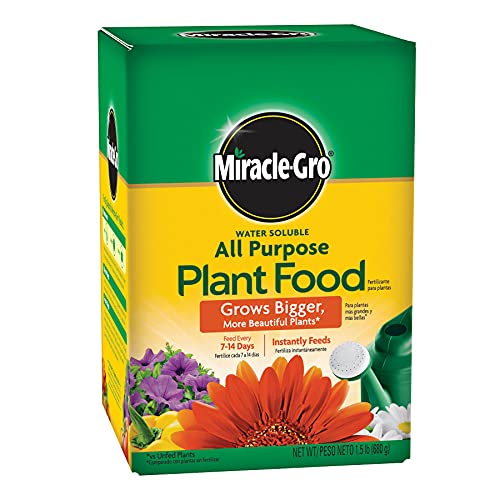
FEEDS ALL PLANTS: Miracle-Gro Water Soluble All Purpose Plant Food is a plant fertilizer that feeds all outdoor, in-ground and indoor plants, including roses, flowers,...
Miracle-Gro’s water soluble formula works fast for gardeners who want visible results. I appreciate how this powder dissolves quickly, delivering nutrients right where daylilies need them most. The 24-8-16 NPK ratio supports hearty blooms and healthy foliage without burning plants when you follow directions.
Mix 1/2 teaspoon per gallon indoors or 1.5 tablespoons per 1.5 gallons outdoors, then water at the soil base every two weeks inside, every 7-14 days outside. The included scoop makes measuring foolproof. With one container covering roughly 600 square feet, you’re getting solid coverage for garden beds or containers alike.
Best For: This product is best for gardeners of all experience levels who want a versatile, fast-acting fertilizer suitable for indoor houseplants, outdoor gardens, flowers, vegetables, trees, and shrubs.
Pros:
- Fast-dissolving water soluble formula delivers visible results quickly with a balanced 24-8-16 NPK ratio that won’t burn plants when used as directed
- Convenient included scoop with dual measurements (1/2 tsp for indoor, 1.5 tbsp for outdoor) eliminates guesswork and simplifies application
- Excellent coverage at approximately 600 square feet per container, making it cost-effective for both small container gardens and larger garden beds
Cons:
- Requires frequent reapplication (every 2 weeks indoors, every 7-14 days outdoors), which can be time-consuming for large gardens
- Water soluble formula means nutrients may leach away quickly, especially in outdoor settings with rainfall or frequent watering
- Requires purchase of optional Miracle-Gro Garden Feeder attachment for easier application on larger outdoor areas
Peace Lily Fertilizer Liquid Plant Food 8 oz
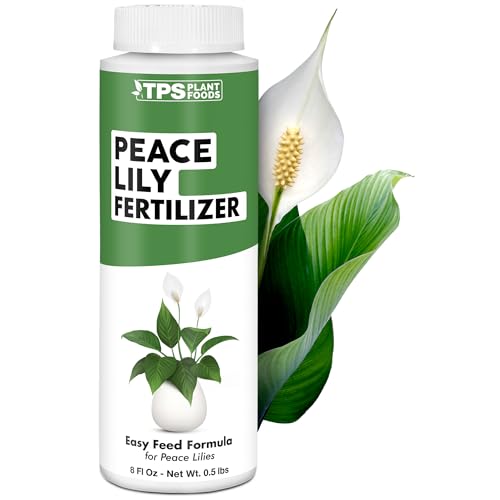
Supports Blooms & Lush Green Leaves Helps encourage better flowering, rich foliage color, and balanced growth throughout the year. Ideal Peace Lily Fertilizer for Indoor...
TPS Nutrients’ Peace Lily Fertilizer stands out for indoor gardeners seeking gentle, balanced nutrition. I appreciate how this 8 oz liquid formula prevents yellowing leaves and nutrient stress without burning delicate roots. The 3:1:2 mixing ratio ensures consistent feeding that encourages vibrant blooms and rich green foliage year-round.
What makes it particularly valuable is its suitability for potted peace lilies, where precise nutrient control matters. You’ll notice improved nutrient uptake and overall plant health with regular application. Made in the USA, this product delivers reliable, gentle nutrition that keeps your indoor plants thriving without the guesswork.
Best For: Indoor gardeners looking for a gentle, balanced fertilizer specifically formulated to keep potted peace lilies healthy with vibrant blooms and lush green foliage without the risk of root burn.
Pros:
- Gentle formula designed for sensitive roots that won’t burn or overfeed delicate indoor plants
- Prevents yellowing leaves and nutrient stress while promoting vibrant blooms and rich foliage color
- Made in the USA, demonstrating reliable quality
Cons:
- Only available in an 8 oz size, which may require frequent repurchasing for those with multiple plants or larger collections
- Requires precise mixing at a 3:1:2 ratio, which demands careful measurement and attention to avoid inconsistent feeding results
- Formulated specifically for peace lilies, limiting versatility if you have a diverse range of houseplants with different nutritional needs
Lilly Miller Bulb & Bloom Food 4-10-10 4lb
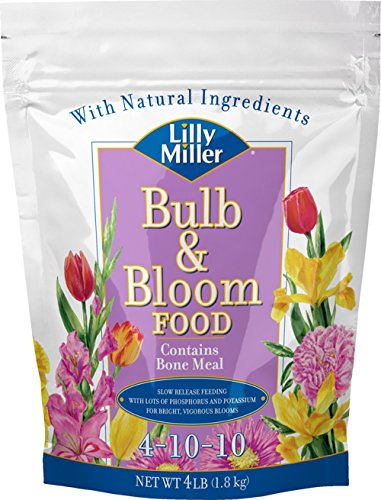
Lilly Miller Bulb & Bloom Food 4-10-10 4lb The combination of phosphorus and potassium will give bright, vigorous blooms Slow release feeding This product is made in United...
If you’re after reliable, consistent blooms without the fuss of frequent feeding, this powder formula hits the mark. I appreciate the 4-10-10 NPK ratio, which prioritizes phosphorus and potassium for those vibrant daylily flowers you’re chasing.
The slow-release mechanism means you’re not babying your plants with constant applications. At 4 pounds, you’ve got enough to cover a decent garden space. Simply mix according to the ratio provided, and let the formula work its magic. Made in the United States, it’s a straightforward choice for gardeners who want solid results without complicated instructions or unnecessary additives.
Best For: This product is best for gardeners seeking a reliable, slow-release fertilizer solution for bulbs and flowering plants who prefer the convenience of less frequent applications.
Pros:
- Slow-release formula reduces the need for frequent feeding applications
- NPK ratio of 4-10-10 is specifically formulated to promote bright, vigorous blooms with enhanced phosphorus and potassium
- 4-pound powder form provides adequate coverage for a decent-sized garden at a straightforward mixing ratio
Cons:
- Powder form requires manual mixing, which may be inconvenient for some gardeners who prefer ready-to-use liquid or granule options
- Limited to bulb and bloom care, so it may not be suitable for a diverse garden with multiple plant types
- Slow-release mechanism means results are gradual and not ideal for gardeners seeking immediate bloom enhancement
Factors to Consider When Choosing Plant Food for Daylilies
When I’m selecting the right plant food for my daylilies, I focus on several key elements: the nutrient ratio (since daylilies typically prefer a balanced or slightly higher phosphorus blend), the growth stage of my plants (spring feeding differs from post-bloom applications), and whether I prefer granular, liquid, or slow-release formulations based on my schedule and garden setup. I also consider how quickly my soil depletes nutrients in my specific climate and garden layout, plus whether my coverage area requires a bulk size like a 4-pound bag or something more compact. Getting these factors aligned means my daylilies get exactly what they need without waste or guesswork.
Nutrient Ratio Requirements
What’s really going on when you’re shopping for plant food is that you’re looking for the right balance of nitrogen, phosphorus, and potassium (that NPK ratio on the label) to match what your daylilies actually need at different growth stages. I’d recommend targeting a ratio like 4-10-10 or 10-10-10, where phosphorus and potassium slightly edge out nitrogen. Why? Because higher phosphorus fuels stronger root systems and better flower development, while potassium supports sturdy stems and overall plant vigor.
Nitrogen still matters for foliage, but you don’t want it dominating the mix. And here’s the practical piece: ensure your fertilizer includes micronutrients like calcium, magnesium, and sulfur. These secondary elements support blooming potential and general plant health, giving your daylilies everything they need to thrive.
Plant Growth Stage Timing
Timing your fertilizer applications around your daylilies’ natural growth cycles is honestly where most gardeners see the biggest difference in bloom quality and plant vigor. I apply fertilizer at planting time to jumpstart root establishment, then feed again just before bloom season arrives. That pre-bloom application gives your plants the nutrient boost they need for those stunning flowers you’re after.
Once blooms fade, I reapply fertilizer in late summer or early fall, adjusting based on how vigorously my plants performed. And here’s the thing: slow-release formulations save you time since they steadily feed your daylilies over weeks or months rather than demanding frequent applications.
Match your feeding schedule to what you observe. If foliage looks lackluster or blooms diminish, increase frequency. If everything looks robust, quarterly applications work fine.
Application Method Preferences
How you deliver nutrients to your daylilies matters just as much as what you’re feeding them, and honestly, your choice hinges on your growing setup and how hands-on you want to be. I recommend considering two main categories: granular formulas work beautifully for in-ground plantings where you can work them into the soil, while liquid solutions shine for container daylilies or plants with sensitive roots.
If convenience appeals to you, slow-release granular products deliver nutrients gradually over several weeks or months, requiring less frequent applications. Liquid feeds demand more attention but offer precision and quick uptake. Whatever method you choose, ensure it’s compatible with your irrigation system and follow label instructions carefully.
Your reapplication schedule depends on the product’s release pattern, typically ranging from quarterly for granular to biweekly for liquids.
Soil Nutrient Depletion Cycles
Beyond picking the right delivery method, you’ve got to understand what’s actually happening in your soil throughout the growing season. As your daylilies flourish, they’re constantly pulling nitrogen, phosphorus, and potassium from the ground, gradually depleting those essential nutrients. I’ve learned that sandy soils lose these elements faster than clay-based ones, which means your feeding schedule depends partly on what you’re working with.
This depletion doesn’t happen all at once, but rather in cycles tied to growth phases. Before blooming and after peak growth, nutrient availability drops significantly. That’s why I recommend applying balanced fertilizers strategically throughout the season rather than hoping one spring application covers everything. Understanding these cycles helps you stay ahead of deficiencies and keep your daylilies thriving year after year.
Coverage Area Capacity
When you’re standing in front of shelves stacked with fertilizer options, the package size alone won’t tell you what you actually need. Coverage area capacity reveals how much ground each product actually covers, and that’s where your real decision-making begins.
A 1-lb granular bag might cover around 25 newly planted daylilies when applied as directed, while liquid formulas vary based on water dilution. Slow-release granules stretch further across your season, reducing reapplication frequency compared to water-soluble options. And here’s what matters: whether you’re feeding in-ground plantings or containers changes your coverage calculations substantially.
Read those labels carefully. They’ll specify square footage or plant counts, letting you match package size to your actual garden needs without overspending or running short mid-season.
Release Duration Patterns
You’ve got two main camps here: continuous-release fertilizers that feed gradually over months, and immediate-action solutions that deliver nutrients in one shot. Granular or powder formulas work slowly once soil absorbs them, while liquid options feed roots right away.
Your feeding schedule depends on which you choose. Some products ask for reapplication every three months, while others align with pre-bloom and late-season feeding windows. Matching these patterns to your daylilies’ growth stages maximizes both bloom potential and long-term plant health.
Bloom Enhancement Effectiveness
If you want daylilies that truly dazzle, the nutrient balance in your plant food matters more than you might think. I’ve found that formulas emphasizing higher phosphorus and potassium, like 4-10-10, consistently deliver more vibrant, intense blooms compared to nitrogen-heavy options. Why? Excessive nitrogen pushes plants toward foliage growth at flowering’s expense, leaving you with green leaves but fewer flowers.
Slow-release formulations prove particularly effective here. They sustain nutrient delivery over months, aligning with your daylilies’ natural bloom cycles and supporting longer flowering periods. Regular applications every 2-3 months keep nutrient availability steady, which translates to improved flower quantity and noticeably richer color saturation.
The result: blooms that command attention rather than fade into background greenery.
Species-Specific Formulation Benefits
Now that you understand how nutrient ratios directly impact bloom quality, it’s worth considering how different formulation types align with your daylilies’ specific needs throughout the growing season. Species-specific formulations give you a real advantage because they’re designed with daylily biology in mind. These blends typically include application timing guidance for pre-bloom and late-season periods, which maximizes your flowering potential when it matters most.
You’ll find slow-release options that maintain steady nutrient availability, supporting consistent growth across your daylilies’ natural cycles. Bulb-focused formulas emphasize phosphorus and potassium to enhance bloom brightness and bud development specifically. Liquid formulations offer rapid nutrient uptake when you need quick bloom support.
Choosing a species-specific option means you’re working with your plants’ actual requirements rather than guessing.