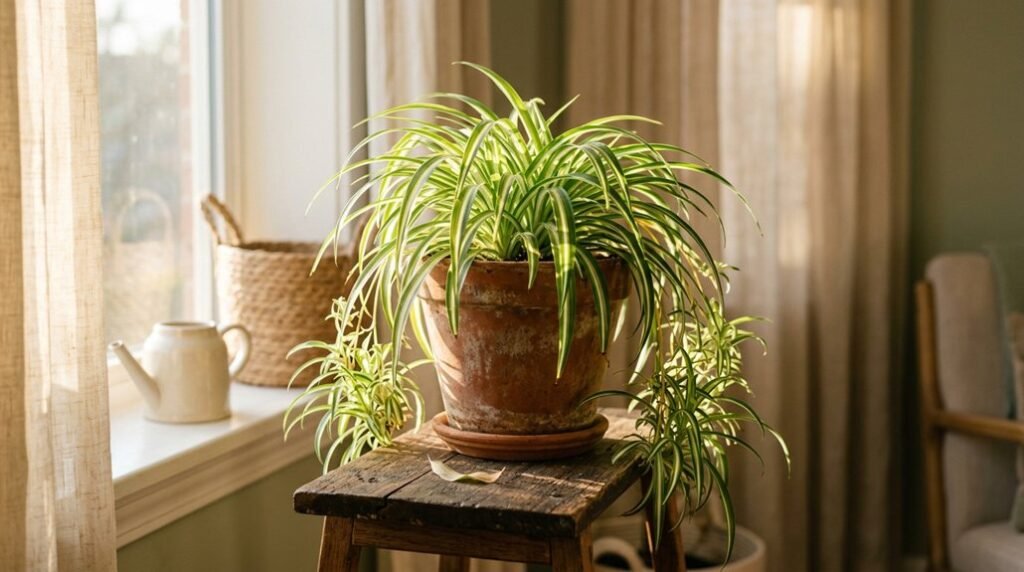
Spider plants are forgiving, but they’re not indifferent to their soil. Get the drainage wrong, and you’ll watch those lovely green-and-white leaves start yellowing faster than you’d like.
I’ve put together five soil options that’ll give your spider plant exactly what it needs to thrive, each with distinct advantages depending on your watering habits and gardening philosophy. Let’s break down what makes each one stand out.
Miracle-Gro Houseplant Potting Mix for Indoor Containers (4 qt)

INDOOR GROWING: Growing indoors is easy under the right conditions; Miracle-Gro Houseplant Potting Mix is an indoor plant potting soil that combines key elements container...
If you’re looking for a ready-to-go soil that handles the basics without fuss, Miracle-Gro’s Houseplant Potting Mix is your straightforward choice. This blend combines perlite, sphagnum peat moss, and coir with built-in fertilizer that feeds your spider plants for up to six months. I appreciate that it’s formulated to resist fungus gnats by skipping compost and bark, which means fewer pest headaches down the line.
The included wetting agent helps with moisture retention, and one 4-quart bag fills an 8-inch container nicely. After 30 days, I’d recommend switching to regular feedings with Miracle-Gro Indoor Plant Food to keep your spider plants thriving. It’s reliable, accessible, and works well for common houseplants without requiring you to mix custom amendments.
Best For: This product is best for indoor gardeners who want a convenient, pre-fertilized potting mix that requires minimal effort and reduces common pest problems like fungus gnats.
Pros:
- Built-in fertilizer feeds plants for up to 6 months, reducing the need for immediate supplemental feeding
- Formulated to resist fungus gnats by excluding compost and bark, helping prevent common indoor plant pest issues
- Includes a wetting agent for improved moisture retention, making watering and plant hydration more manageable
Cons:
- Requires switching to regular Miracle-Gro Indoor Plant Food after 30 days for continued optimal plant health
- One 4-quart bag only fills an 8-inch container, so multiple bags may be needed for larger plants or multiple containers
- Contains peat moss, which raises environmental concerns for eco-conscious gardeners due to unsustainable harvesting practices
Back to the Roots Organic Indoor Potting Mix (6 Quart)
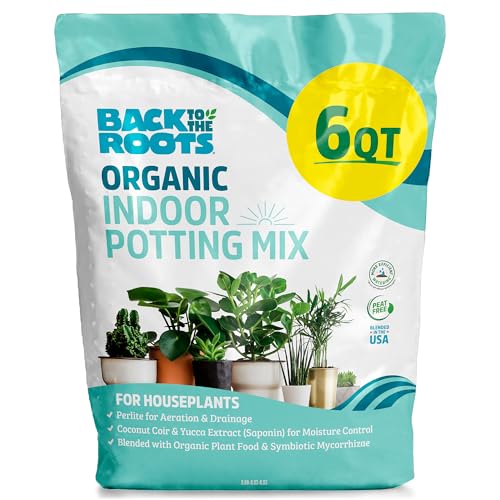
Includes 6qt of Back to the Roots Indoor Potting Mix. Our Potting Mix contains organic yucca extract that aids in retaining moisture in the soil which keeps your indoor...
Back to the Roots Organic Indoor Potting Mix (6 Quart)
Looking for a soil that actually supports your spider plant’s thirst without drowning its roots? Back to the Roots Organic Indoor Potting Mix delivers exactly that. This 6-quart blend combines yucca extract for superior moisture retention with mycorrhizae fungi that boost root development and nutrient absorption.
You’re getting a peat-free formula that cuts greenhouse emissions while eliminating bark and compost, which means fewer indoor gnats wreaking havoc on your plants. The addition of dolomitic limestone balances your soil’s pH, making nutrients more available to your spider plant. At 3.6 pounds, it’s lightweight enough to manage, and the organic ingredients keep both your plant and your family safe.
Best For: Indoor plant enthusiasts who want a lightweight, organic potting mix that balances moisture retention with drainage and reduces pest problems without compromising plant health.
Pros:
- Yucca extract and mycorrhizae work together to optimize hydration, root development, and nutrient absorption for thriving houseplants
- Peat-free and bark-free formula reduces environmental impact and indoor gnats while being safe for pets and families
- Dolomitic limestone naturally balances soil pH to maximize nutrient availability, eliminating the need for separate amendments
Cons:
- 6-quart size may be too large for those with only a few small potted plants or limited storage space
- Peat-free formulas can sometimes dry out faster than peat-based alternatives, requiring more attentive watering schedules
GARDENERA Premium Spider Plant Potting Soil Mix – (2 Quart Bag)

🌳 PROFESSIONALLY MIXED IN THE USA - Each bag is hand blended on our small family farm with premium horticultural grade ingredients: New Zealand Bark, Peat Moss, Perlite,...
I’d reach for GARDENERA’s Spider Plant Potting Soil Mix if you’re serious about growing healthy, vibrant spider plants at home. This hand-blended formula combines New Zealand bark, peat moss, perlite, and worm castings to create an ideal growing environment.
The extra perlite promotes rapid root development while maintaining excellent drainage that prevents waterlogging yet retains moisture for nutrient absorption. You’ll appreciate that it’s 100% natural, approved for organic growing, and contains no additives.
At 2 quarts per bag, it’s perfect for potting or refreshing soil in smaller containers. Since Gardenera developed this mix specifically for spider plants, you’re getting expertise from plant parents who understand exactly what these plants need to thrive.
Best For: This product is best for home gardeners and plant enthusiasts who want to cultivate healthy, thriving spider plants with a specially formulated, natural soil mix.
Pros:
- Hand-blended with premium horticultural ingredients (New Zealand bark, peat moss, perlite, and worm castings) that promote rapid root development and optimal drainage
- 100% natural composition with no additives, approved for organic growing, making it safe and environmentally conscious
- Specifically formulated by plant parents for spider plants, ensuring the soil composition meets the exact needs of this plant variety
Cons:
- 2-quart bag size may be limiting for larger container gardening projects or multiple plants
- Specialized formulation for spider plants means it may not be ideal for growing other plant varieties
Miracle-Gro Indoor Potting Mix for All Plants (2-Pack)
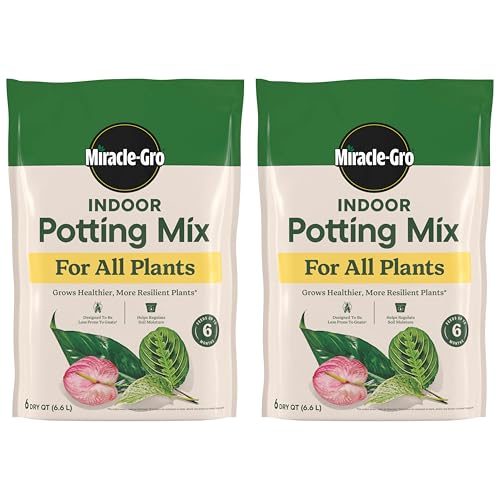
Miracle-Gro Indoor Potting Mix for All Plants feeds houseplants for up to 6 months and grows healthier, more resilient plants (vs unfed when used as directed) This potting...
Why spend time mixing your own soil when you’ve got a ready-to-use option that actually works? I appreciate this blend because it combines sphagnum peat moss, coconut coir, and perlite into a lightweight formula that retains moisture while promoting drainage.
The nutrient-rich composition feeds your spider plants for up to 6 months, eliminating that initial guessing game about fertilizer schedules. What really sets it apart is the bark and compost-free design, which significantly reduces fungus gnat problems that plague indoor gardeners. Each 2-pack gives you 12 quarts total, enough to refresh multiple containers.
Simply fill your pot one-third full, position your plant, top off, and water thoroughly. Annual repotting keeps your spider plant thriving.
Best For: Indoor gardeners looking for a convenient, ready-to-use potting solution that reduces fungus gnat problems while supporting healthy growth across a wide variety of houseplants, herbs, and tropical plants.
Pros:
- Ready-to-use formula eliminates the need for mixing and guesswork, with nutrient feeding that lasts up to 6 months
- Bark and compost-free composition significantly reduces fungus gnat infestations, a common problem for indoor plant enthusiasts
- Lightweight blend of sphagnum peat moss, coconut coir, and perlite provides optimal moisture retention and drainage for healthier, more resilient plants
Cons:
- Requires annual repotting to replenish nutrients and maintain soil quality
- Contains peat moss, which raises environmental concerns for eco-conscious gardeners due to unsustainable harvesting practices
- Limited to indoor use only, making it unsuitable for outdoor gardening or container plants kept outside
Craft Organic Houseplant Potting Mix 2QT Peat Free

COMPLETE INDOOR POTTING SOIL FOR HEALTHY ROOT DEVELOPMENT: A premium potting soil for indoor plants designed to replace generic potting mix or garden dirt. Balances moisture...
Craft Organic Houseplant Potting Mix is my go-to recommendation if you’re after a spider plant soil that actively prevents the problems most of us encounter indoors. This peat-free formula combines premium worm castings with chunky Douglas fir bark, lava rock, and pumice to create exceptional drainage and aeration. The charged biochar technology locks in nutrients while maintaining permanent soil structure, so you’ll feed less frequently and avoid burn.
What I appreciate most is how it arrives pre-moistened, settling roots quickly after repotting and reducing transplant shock. Plus, the airy composition naturally deters gnats, keeping your indoor space cleaner and healthier for your spider plants long-term.
Best For: Indoor plant enthusiasts and apartment dwellers looking for a premium, peat-free potting mix that prevents common issues like root rot, gnats, and transplant shock while supporting healthy growth across tropical plants, herbs, and flowers.
Pros:
- Exceptional drainage and aeration with chunky Douglas fir bark, lava rock, and pumice prevents overwatering and root rot
- Pre-moistened bioactive formula with premium worm castings reduces transplant shock and provides long-lasting nutrient support with less frequent feeding
- Peat-free and naturally gnat-resistant formula maintains airflow and keeps indoor living spaces cleaner and healthier
Cons:
- Limited to 2QT volume, requiring multiple purchases for larger potting projects or multiple plants
- May dry out quickly due to chunky, high-drainage composition, requiring more frequent watering monitoring for moisture-sensitive plants
Factors to Consider When Choosing Soil for Spider Plant
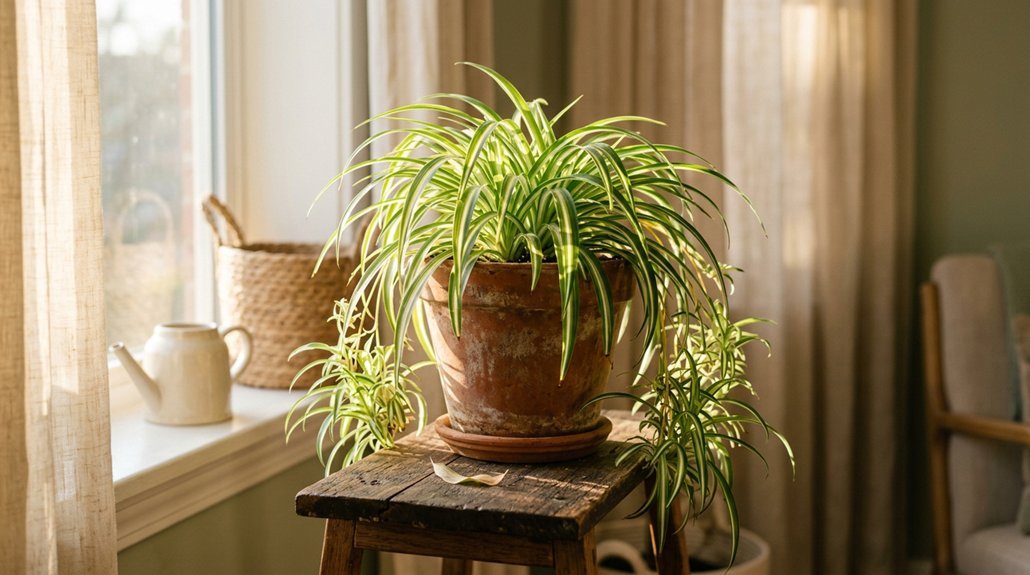
When I’m selecting soil for my spider plant, I focus on five critical factors that’ll make or break its health: drainage and water retention (you want moisture to flow through without pooling), nutrient content and feeding capacity, pest prevention features that keep unwanted critters at bay, soil composition and structure (which determines how roots establish themselves), and pH balance that keeps your plant’s chemistry in check. These elements work together to create an environment where spider plants don’t just survive, they thrive. And I’ll walk you through each one so you can pick soil that matches your plant’s specific needs.
Drainage and Water Retention
How you balance drainage and moisture retention might just be the most critical factor in keeping your spider plant happy and healthy. I’ve found that the sweet spot involves a well-draining mix that still holds enough moisture between waterings to keep roots consistently moist without turning soggy.
You’ll want to incorporate materials like perlite, pumice, or coarse sand to boost porosity. Pair these with a lightweight, friable base such as sphagnum peat moss or coconut coir. This combination prevents waterlogging while buffering moisture effectively.
Why does this matter? A properly balanced soil reduces root rot and gnat problems significantly. Your spider plant thrives when its roots stay moist but never waterlogged, creating that ideal growing environment.
Nutrient Content and Feeding
What you’re really looking for in a spider plant soil is a balanced foundation that feeds your plant steadily without requiring constant intervention on your part. I recommend choosing a potting mix with built-in, slow-release fertilizer that’ll sustain your plant for roughly six months. This approach cuts down on how often you need to fertilize.
Look for mixes specifically formulated for indoor container plants, ideally containing organic amendments like worm castings or mycorrhizae. These enhance nutrient uptake and root development naturally.
And here’s what to avoid: soils high in salt or excessive peat decomposition, which cause nutrient burn and salt accumulation around roots. Once you’ve potted your spider plant, wait about 30 days before starting regular feeding. Then follow your fertilizer’s dilution schedule precisely.
Pest Prevention Features
Since spider plants thrive in containers where drainage and moisture control directly impact pest vulnerability, I’d encourage you to prioritize soil formulations designed to discourage fungus gnats and other common indoor plant pests.
I recommend selecting mixes labeled as pest-reducing or gnat-reducing, which typically exclude compost and bark that create fungus gnat habitats. Look for peat-free, organic-based options with coconut coir and perlite instead. These ingredients improve drainage and airflow, eliminating standing moisture where pests thrive.
When evaluating soil options, avoid formulations with slow-release chemical fertilizers that attract unwanted insects. Instead, choose balanced nutrient blends you can control through targeted feeding. The right soil foundation, combined with your watering discipline, creates an inhospitable environment for indoor plant pests while keeping your spider plants healthy and pest-free.
Soil Composition and Structure
Your spider plant’s root system depends entirely on the soil structure you choose, and getting this right makes all the difference between a thriving plant and one that struggles with root rot or compaction.
I look for soil that balances moisture retention with drainage. Adding perlite or pumice creates air gaps around roots, preventing that suffocating compacted feeling heavy soils deliver. Organic matter like peat, coco coir, or worm castings provides nutrients while maintaining just enough moisture without sogginess.
And here’s what I avoid: dense mixes heavy with bark or compost. These trap moisture and harbor fungus gnats, creating problems you’ll regret. The ideal structure supports rapid root growth with proper aeration, giving your spider plant the resilience it needs to flourish indoors.
pH Balance and Soil Chemistry
How much thought have you given to your soil’s pH before potting up your spider plant? I’ll be honest, it’s the difference between thriving foliage and frustrating yellowing leaves. Your spider plant craves slightly acidic to neutral soil, ideally between 6.0 and 7.0 pH. When pH swings out of this range, your plant struggles to absorb essential nutrients despite them being present in the soil.
I recommend using a pre-mixed indoor potting soil labeled within that 6.0-7.0 range. It eliminates guesswork and maintains stability after watering.
If you need adjustments, dolomitic limestone raises pH while sulfur lowers it, but add these amendments cautiously. A balanced pH keeps your spider plant’s nutrient uptake steady, preventing the stunted growth and leaf discoloration that come from chemical imbalances.